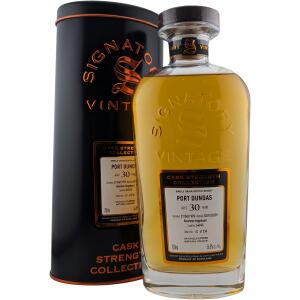
Port Dundas
1995 Signatory Vintage Cask Strength Collection
Malty & Dry4.5 ★
Single Grain Whisky
56.8% • 700ml • Lowlands
6 Bottles Remaining
$327.74
Whisky Folk: $311.35

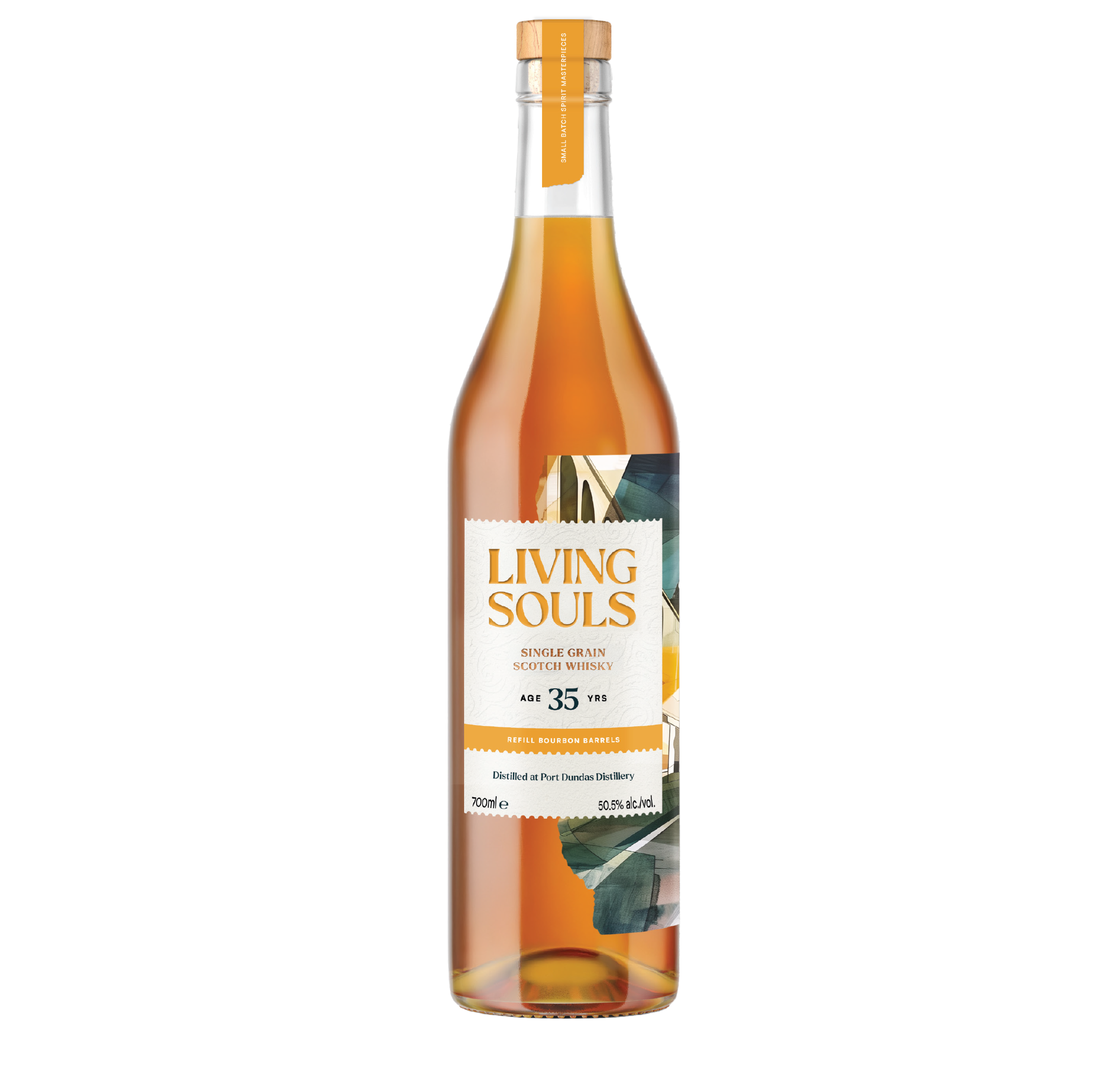

PRODUCERPort Dundas

BOTTLERBlended Whisky by Living Souls

AGE35 Years Aged

CASK TYPERefill Bourbon

RELEASEStrath Exclusive In BC Cask Strength Limited Edition Release

CHILL-FILTRATIONNo

ADDED COLOURNo

PEAT SMOKEDNo

Port Dundas once stood proud atop the highest point in Glasgow, its red-brick warehouses and towering chimney overlooking the Forth & Clyde Canal, a testament to industrial ambition in the heart of the city. Located within a hub of docks and railways, the distillery’s setting was as much about connectivity as character, its spirit shaped by urban grit and the pulse of a blending powerhouse.
Founded in 1811 by Daniel MacFarlane as a malt distillery and joined two years later by Brown, Gourlie & Co., Port Dundas would soon embrace innovation. By the mid-1840s, both sites had installed Coffey stills, converting the operation to grain whisky. Following a merger with Cowlairs in the 1860s and absorption of Dundashill in 1877, the distillery grew to become Scotland’s largest, boasting multiple coffey and pot stills and once the tallest brick chimney in the world. Its fermentation, continuous distillation through Coffey stills, and ageing primarily in ex-bourbon casks produced a sweet, creamy spirit with whispers of vanilla and cereal. At its peak it yielded about 39 million litres annually, supplying blends such as Johnnie Walker, White Horse, Haig, Bell’s, and J&B.
Despite surviving two fires in the early 20th century, wartime closures, and a thorough 1970s modernisation, the distillery closed in 2010 when Diageo consolidated grain production at Cameronbridge. Demolished in 2011, Port Dundas lives on only through rare independent bottlings, ghostly echoes of Glasgow’s blending heyday and a reminder that even the mightiest sites can vanish when their purpose is fulfilled.
Living Souls is a notably recent arrival, founded in Glasgow in 2024, but it does not feel like a casual newcomer. The company was established by three industry veterans, Calum Leslie, Jamie Williamson and John Torrance, whose experience spans roles at Loch Lomond Group, Douglas Laing, Diageo and beyond. That background helps explain why the range arrived with an unusual degree of confidence: rather than easing into the market with one or two polite releases, Living Souls launched with a set of whiskies that already suggested a distinct point of view.
What makes that point of view interesting is that Living Souls does not seem especially interested in simply copying the standard independent bottler formula. There are single malts in the range, certainly, but the company has also shown an appetite for creative blending, small batch releases and whiskies with slightly unusual stories behind them. Early bottlings included a 15-year-old blended Scotch drawn from a developing solera system, alongside older blends and malts presented less as label exercises than as characterful, idiosyncratic bottlings. It gives the impression of a company more concerned with whether a whisky is interesting than whether it fits neatly into a familiar category.
There is, too, a modern sense of curation about Living Souls. The emphasis appears to be on flavour profile, individuality and release concept rather than sheer austerity, which sets it slightly apart from bottlers whose identity rests chiefly on single cask purity. That does not make it less serious, only differently focused. If many independent bottlers aim to present a cask exactly as found, Living Souls seems more interested in presenting whisky as a compelling finished idea, shaped by experience, selection and a certain willingness to be a little unconventional.
Single Malt Whisky
46% • 700ml • Speyside
2 Bottles Remaining
Blended Malt Whisky
48% • 700ml • Speyside
6 Bottles Remaining
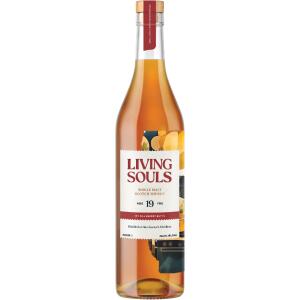
Single Malt Whisky
48% • 700ml • Islands
5 Bottles Remaining

Single Malt Whisky
55% • 700ml • Islands
2 Bottles Remaining
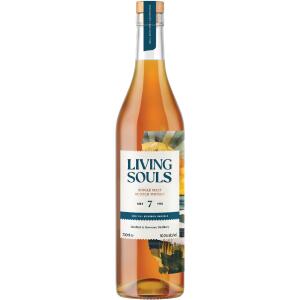
Single Malt Whisky
50% • 700ml • Islay
4 Bottles Remaining

The below is the average score out of 5 from our members, and the flavour profile which was voted to be the most prominent.
