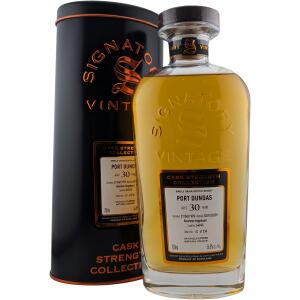
Port Dundas
1995 Signatory Vintage Cask Strength Collection
Malty & Dry4.5 ★
Single Grain Whisky
56.8% • 700ml • Lowlands
6 Bottles Remaining
$327.74
Whisky Folk: $311.35


PRODUCERPort Dundas

BOTTLERIndependent Bottling by Signatory Vintage

AGE16 Years Aged, Distilled 6th August 2008

CASK TYPE2nd Fill Oloroso Sherry Butt

RELEASEStrath Exclusive In BC Small Batch Release

CHILL-FILTRATIONNo

ADDED COLOURNo

PEAT SMOKEDNo

Port Dundas once stood proud atop the highest point in Glasgow, its red-brick warehouses and towering chimney overlooking the Forth & Clyde Canal, a testament to industrial ambition in the heart of the city. Located within a hub of docks and railways, the distillery’s setting was as much about connectivity as character, its spirit shaped by urban grit and the pulse of a blending powerhouse.
Founded in 1811 by Daniel MacFarlane as a malt distillery and joined two years later by Brown, Gourlie & Co., Port Dundas would soon embrace innovation. By the mid-1840s, both sites had installed Coffey stills, converting the operation to grain whisky. Following a merger with Cowlairs in the 1860s and absorption of Dundashill in 1877, the distillery grew to become Scotland’s largest, boasting multiple coffey and pot stills and once the tallest brick chimney in the world. Its fermentation, continuous distillation through Coffey stills, and ageing primarily in ex-bourbon casks produced a sweet, creamy spirit with whispers of vanilla and cereal. At its peak it yielded about 39 million litres annually, supplying blends such as Johnnie Walker, White Horse, Haig, Bell’s, and J&B.
Despite surviving two fires in the early 20th century, wartime closures, and a thorough 1970s modernisation, the distillery closed in 2010 when Diageo consolidated grain production at Cameronbridge. Demolished in 2011, Port Dundas lives on only through rare independent bottlings, ghostly echoes of Glasgow’s blending heyday and a reminder that even the mightiest sites can vanish when their purpose is fulfilled.
Single Grain Whisky
56.8% • 700ml • Lowlands
6 Bottles Remaining
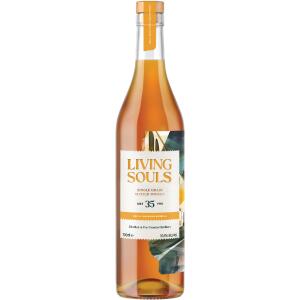
Single Grain Whisky
50.5% • 700ml • Lowlands
Only 1 Bottle Left
Founded in 1988 by Andrew Symington, Signatory Vintage Scotch Whisky Company emerged during a period when independent bottling was still a relatively understated part of the Scotch whisky landscape. Symington’s approach was clear from the outset: to source individual casks and present them with minimal interference, often at natural cask strength, allowing the character of both distillery and maturation to remain fully intact. It was a philosophy rooted not in consistency, but in variation, and in the belief that each cask had something distinct to say.
Over time, the company built a reputation for both breadth and depth. Its releases have spanned an extraordinary range of distilleries, from well-known names to those long since closed, preserving liquid that might otherwise have disappeared into blends or obscurity. This archival instinct has become one of Signatory’s defining traits, offering drinkers access to styles and profiles that no longer exist in active production. The acquisition of Edradour Distillery in 2002 added a physical anchor to its operations, while leaving its core identity as a bottler unchanged.
What distinguishes Signatory most clearly is its transparency and structure. Bottlings typically carry detailed information, including distillation and bottling dates, cask type, and outturn, presented without embellishment. Much of the range is released without chill filtration or added colouring, reinforcing a sense of fidelity to the cask. Alongside its single cask releases, the introduction of the 100 Proof range has provided a more structured offering, where whiskies are selected and batched to be bottled at a consistent strength of 57.1% ABV. These releases retain the company’s emphasis on clarity and integrity, while offering a slightly more approachable framework for regular availability, balancing individuality with a degree of continuity.
Across series such as the Un-Chillfiltered Collection, Cask Strength releases, and the 100 Proof range, the underlying principle remains consistent: each bottle represents a moment in time, shaped by wood, spirit, and patience, and presented with a minimum of intervention.
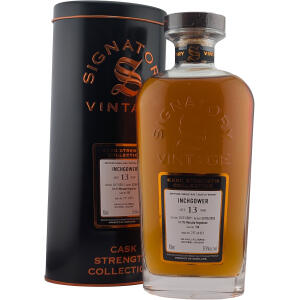
Single Malt Whisky
59.6% • 700ml • Speyside
3 Bottles Remaining
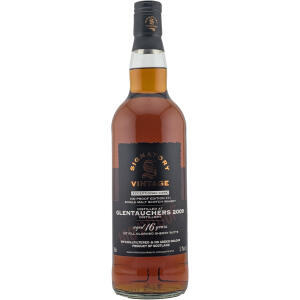
Single Malt Whisky
57.1% • 700ml • Speyside
6 Bottles Remaining
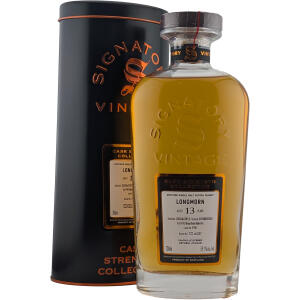
Single Malt Whisky
59.1% • 700ml • Speyside
4 Bottles Remaining
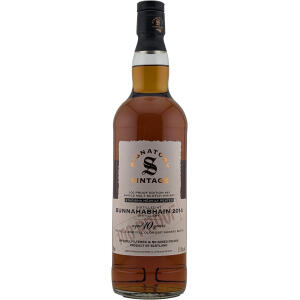
Single Malt Whisky
57.1% • 700ml • Islay
7 Bottles Remaining
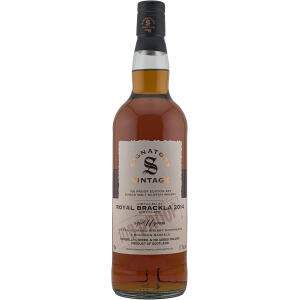
Single Malt Whisky
57.1% • 700ml • Highlands
10+ Bottles Available
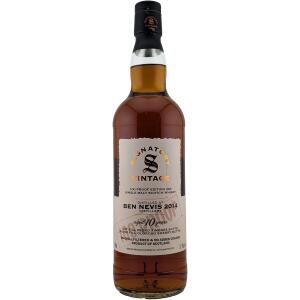
Single Malt Whisky
57.1% • 700ml • Highlands
Only 1 Bottle Left
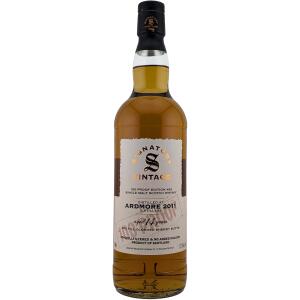
Single Malt Whisky
57.1% • 700ml • Highlands
8 Bottles Remaining
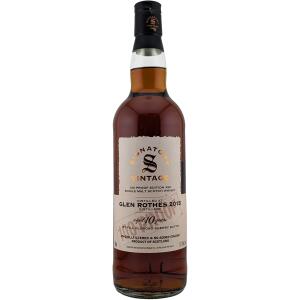
Single Malt Whisky
57.1% • 700ml • Speyside
6 Bottles Remaining
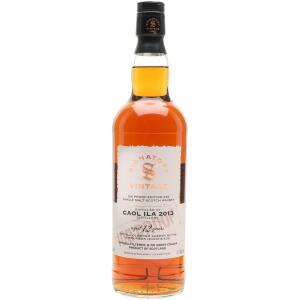
Single Malt Whisky
57.09% • 700ml • Islay
10+ Bottles Available
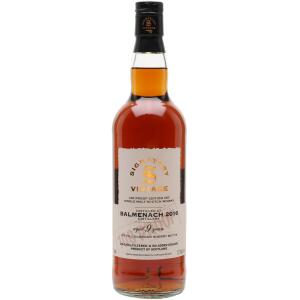
Single Malt Whisky
57.1% • 700ml • Speyside
Only 1 Bottle Left

The below is the average score out of 5 from our members, and the flavour profile which was voted to be the most prominent.

Single Grain Whisky
48.3% • 750ml • Italy
Only 1 Bottle Left

Single Grain Whisky
44% • 700ml • Scotland
2 Bottles Remaining

Single Grain Whisky
45% • 700ml • Japan
3 Bottles Remaining
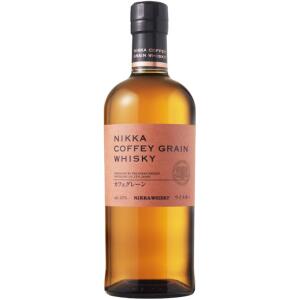

Single Grain Whisky
45% • 700ml • Japan
5 Bottles Remaining